
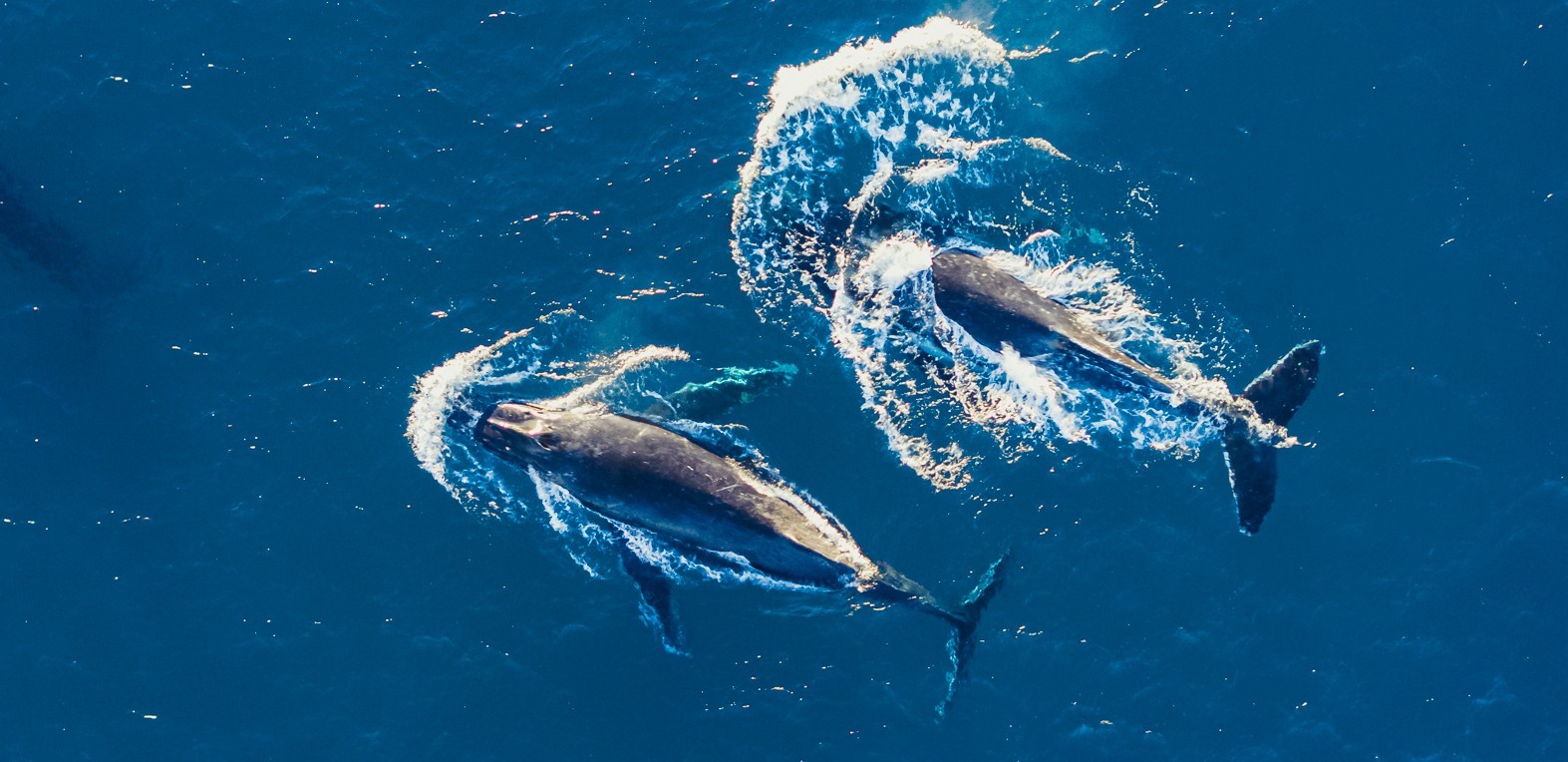
Each winter and through spring, a remarkable journey unfolds just off the shores of Redlands Coast. Drawn by ancient instincts and warmer waters, thousands of humpback whales travel more than 5000km from Antarctica along Queensland’s coastline, creating one of nature’s most spectacular wildlife displays.
From June through November, the annual humpback whale migration transforms the waters surrounding North Stradbroke Island (Minjerribah) into a marine wildlife paradise. For visitors and locals alike, it offers a front-row seat to one of the greatest migrations on Earth.
Few places rival Point Lookout on North Stradbroke Island as a whale-watching destination. Widely regarded as one of Australia’s best land-based whale-watching locations, the headlands provide breathtaking views of humpback whales as they make their way north.
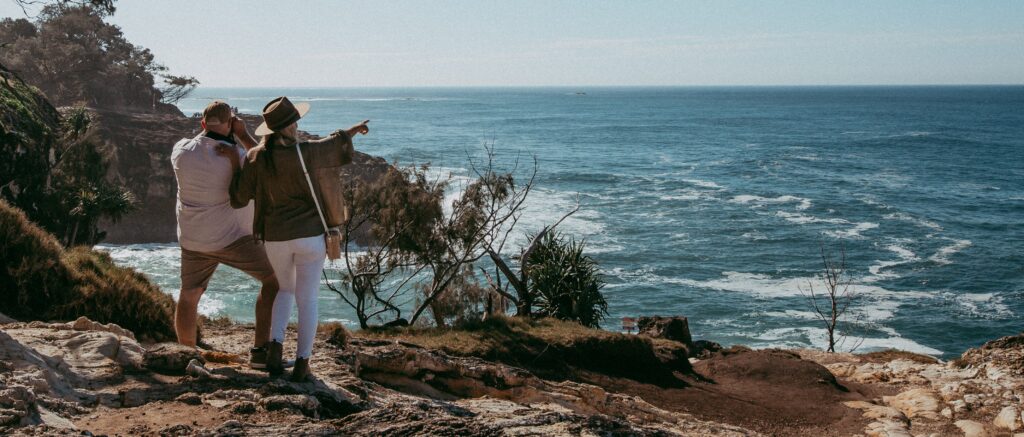
Known as Yalingbila in the local Jandai language, the whales can often be seen breaching, tail slapping and rolling through the ocean just offshore. By the height of the season, multiple sightings throughout the day are almost guaranteed, as an estimated 40,000 whales make the migration northward.
One of the best vantage points is the Minjerribah Panorama Coastal Walk, constructed by Redland City Council. The boardwalk winds along the coastline, linking dedicated whale-watching platforms overlooking Frenchmans Beach with the iconic Gorge Walk at Point Lookout. Along the way, visitors can relax at scenic picnic spots while keeping watch for the next whale spout on the horizon.
While humpbacks may be the stars of the show, Redlands Coast’s waters are home to an astonishing array of marine life.
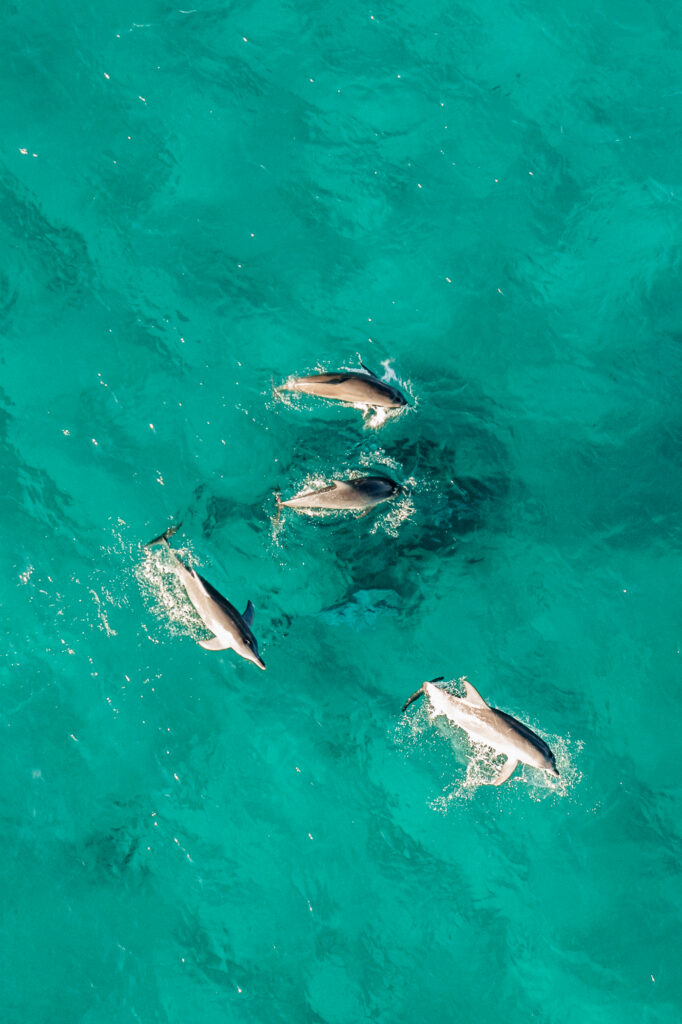
Dolphins (left) are among the most frequently spotted residents. Bottlenose and Indo-Pacific humpback dolphins regularly cruise the sparkling waters of Southern Moreton Bay, delighting onlookers with their playful behaviour. They can often be seen near Point Lookout, around the Amity Point jetty, and along the shores of Cleveland Point and Raby Bay Foreshore Park.
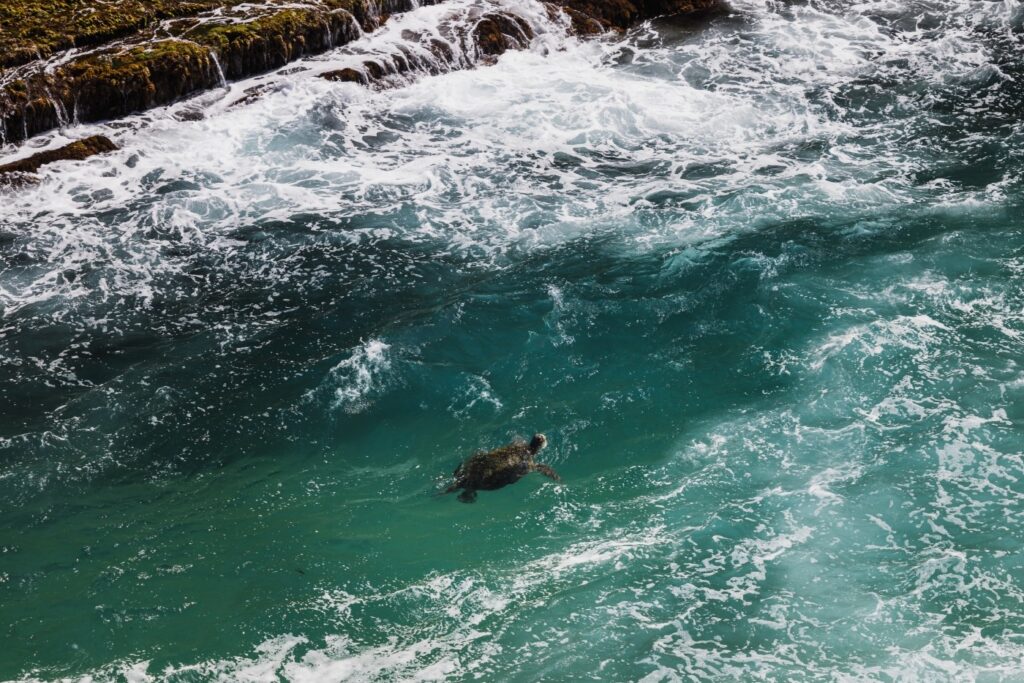
Just beneath the surface, marine turtles (below) thrive in the waters surrounding North Stradbroke Island. Remarkably, six of the world’s seven marine turtle species have been recorded here. Green and loggerhead turtles are the most commonly encountered, although lucky visitors may also spot hawksbill, flatback, leatherback and Pacific ridley turtles gliding through the clear coastal waters.
Another of the region’s most treasured residents is the dugong.
Often called the “sea cow”, the dugong is a shy marine mammal that feeds on seagrass. Redlands Coast waters support a population of approximately 600 to 800 dugongs, making it home to one of the largest dugong populations found near a major urban area.
The extensive seagrass meadows of the local marine park provide ideal feeding grounds, and while sightings can never be guaranteed, spending time on the water offers a rare opportunity to encounter these elusive and gentle creatures. Occasionally, they can even be spotted from the shore.
Adding to the region’s marine magic are manta rays, whose graceful movements have earned them a reputation as the gentle giants of the ocean. Visitors can sometimes spot them gliding through the waves from the Gorge Walk, while divers and snorkellers may enjoy unforgettable encounters beneath the surface.
For those eager to explore below the waterline, North Stradbroke Island boasts one of Australia’s most celebrated dive sites.
At the top of many divers’ lists is Manta Bommie, a rocky reef consistently ranked among the country’s premier dive locations. During the warmer months, manta rays (above) are the headline attraction, often appearing in groups as they circle the reef. The site is also frequented by leopard sharks, eagle rays, turtles, wobbegongs, shovelnose rays and an abundance of pelagic fish, creating a constantly changing underwater spectacle.
Here are some other rewarding dive sites located offshore from North Stradbroke Island:
Amity Point Situated on the island’s north-western tip, Amity Point offers a unique shore-diving experience. Rocky reefs and submerged car bodies have created an artificial habitat rich with marine life. Divers can encounter moray eels, octopus, nudibranchs, stingrays, wobbegongs and colourful reef fish. The site also becomes a fascinating underwater world after dark, with crabs, crayfish and other nocturnal creatures emerging from their hiding places.
Boat Rock For advanced divers seeking adventure, Boat Rock delivers. Strong currents and challenging conditions make it one of the area’s most demanding dives, but the rewards are considerable. Schools of trevally, kingfish, mackerel and snapper patrol the waters, while wobbegongs, turtles, Queensland gropers and even the occasional bronze whaler shark can be found among its rocky ledges and pinnacles.
Shag Rock A local favourite that often flies under the radar, Shag Rock offers reliable diving conditions and an abundance of marine life. Coral gardens and rocky reefs shelter nudibranchs, moray eels, cuttlefish, turtles, rays and small sharks. During summer, leopard sharks and manta rays may also make an appearance. Divers are advised to watch their footing, as well-camouflaged electric rays frequently rest beneath the sand.
Flat Rock Often described as the area’s most exciting dive site, Flat Rock lies just north of the island. Surrounded by coral gardens and plunging to depths of 35m, it attracts turtles, eagle rays, leopard sharks and schools of fish. During winter, experienced divers flock to the famous Shark Alley, where groups of grey nurse sharks gather in an awe-inspiring display.
Middle Reef Located halfway between Shag Rock and Flat Rock, is a large rocky ridge known as Middle Reef. There are a number of dive sites here, in depths from 12m to 33m, where divers can explore ledges, caves and rocky walls. This wonderful rocky reef is coloured by pretty soft corals, sponges, gorgonians, sea whips and bushy black coral trees, the coral so lush as it is nearly always washed by strong currents.
Whether you’re standing on a clifftop watching a humpback whale breach against the horizon, spotting dolphins in Moreton Bay, or descending beneath the waves to swim alongside manta rays and turtles, Redlands Coast delivers extraordinary wildlife encounters at every turn.
As the whale migration continues its annual passage north, there has never been a better time to experience the rich marine environment that makes this corner of Queensland so special.
Here, nature’s greatest travellers share the stage with a spectacular cast of ocean creatures, creating memories that linger long after the season has passed.
To discover more, go to redlandscoast.com.au or drop into the Redlands Coast Visitor Information Centre, 50 Middle Street, Cleveland. The centre is open 9am to 4pm daily (except Good Friday and Easter Sunday) and can be contacted by phone on 1300 667 386 or email [email protected]