
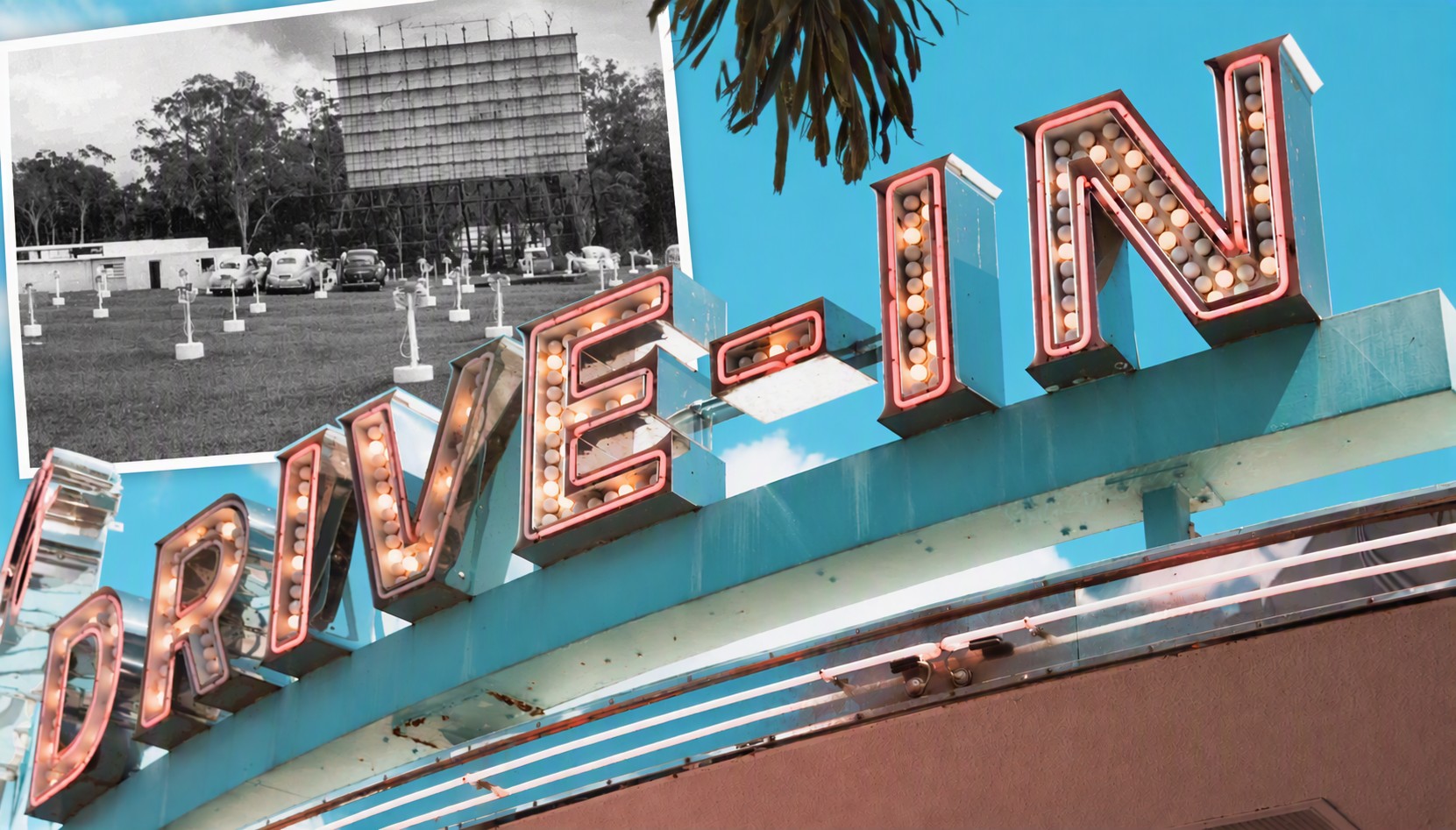
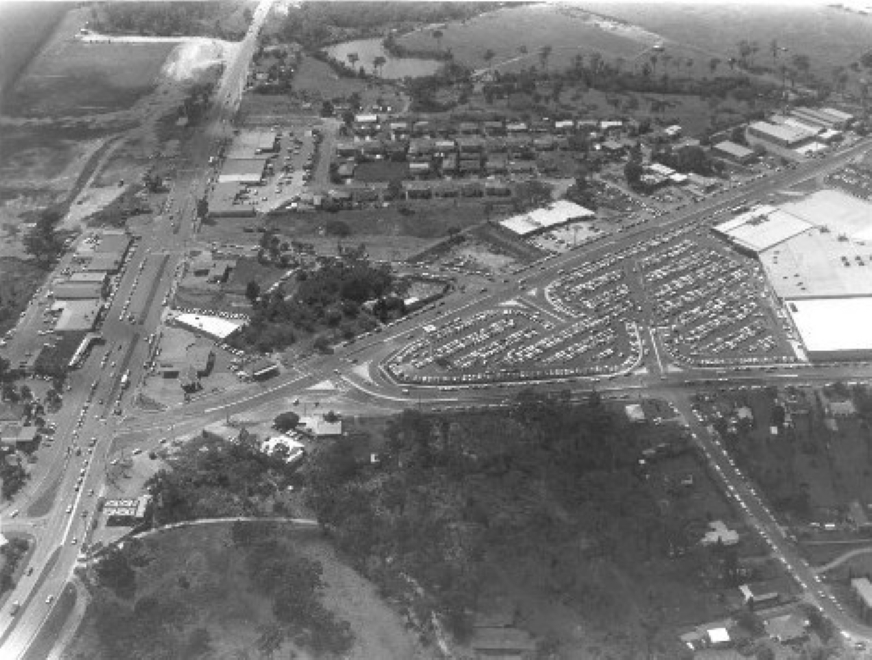
There are many locals who fondly remember the two drive-in theatres that operated in Capalaba – one that ran from 1955 to 1979 at the site where Capalaba Park Shopping Centre now stands; and the other one, further down Redland Bay Road, that ran from 1980 to 1997.
The original Capalaba drive-in was officially Queensland’s first when it opened on Wednesday 21 December 1955, narrowly beating out the Boondall drive-in for the title. Australia’s first drive-in, The Skyline Drive-in, had opened in February of the year before in Burwood, Victoria.
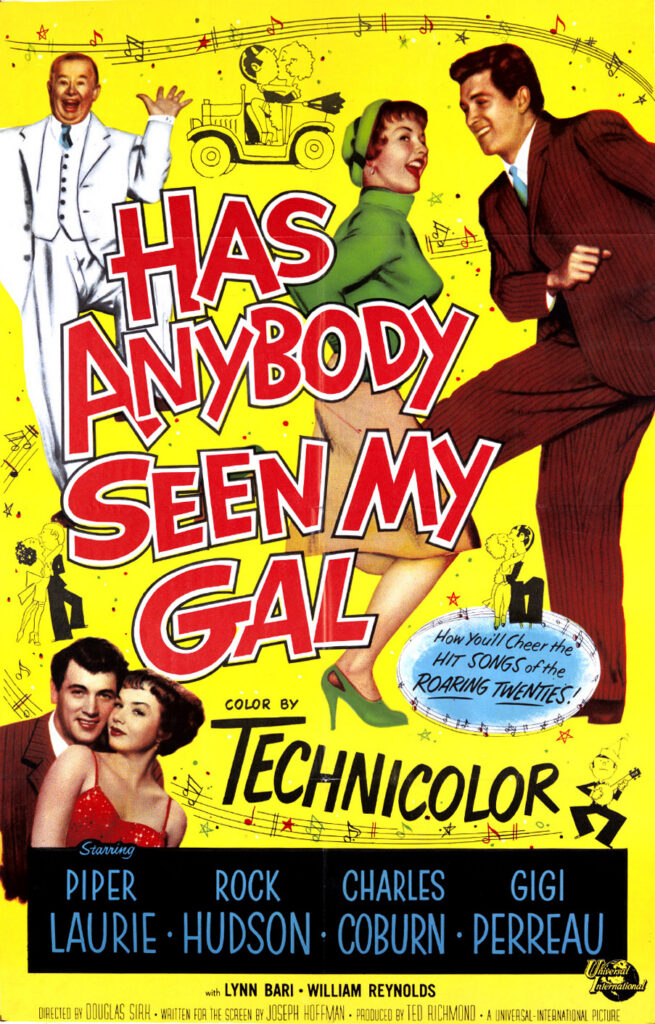
Those who queued in their cars to see the first film shown at Capalaba – Has Anybody Seen My Gal starring Piper Laurie, Rock Hudson and an uncredited James Dean as ‘youth at soda fountain’ – were blissfully unaware that the year was marking a significant turning point for Capalaba. Not only was it leading the way in Queensland, Capalaba was being eyed by local elected officials for development as a major hub for Redland Shire.
The Chairman of the Shire of Redland in 1955 was James Henry Norman Price, affectionately known throughout the shire as Norm. He had been a serving councillor for several years with the Shire of Cleveland before it was amalgamated with part of the Shire of Tingalpa in December 1948 and renamed Shire of Redland (city status didn’t arrive until 2008).
Mr Price was shire chairman from June 1949 to April 1961 and was well known for his efforts to progress the shire. He held a particular passion for the development of both Capalaba and Cleveland as separate, but complementing, centres of commerce and community.
(As a side note, in 1960, the Cleveland Agricultural Horticultural and Industrial Society resolved to rename the Cleveland showgrounds Norm Price Park in recognition of his civic and community service. This was endorsed by the Redland Shire Council in December 1960. An ornamental brick and iron archway with ‘Norm Price Park’ written in ironwork was erected at the entry to the showground in time for the 53rd annual Redlands Show on 15 July, 1961. The gates were restored in 2025 with funding under the Mayor’s Community Infrastructure Program allocation and involved restoration of the heritage sign and brick pillars, installation of new plants, garden mulch and garden edging.)
Mr Price no doubt welcomed the drive-in development that was led by Capalaba Pictures Pty Ltd managing director Mr T Osborne, and the flow-on financial benefits it had for local small businesses such as milk bars, takeaways and restaurants. These businesses suddenly had access to a large nighttime customer base and now could do phone-ahead orders – 1955 also marked the year when a full day and night telephone service became available at Capalaba.
The development of the triangular wedge of land at the corner of Redland Bay Road and Mt Cotton Road as a drive-in proved a bigger drawcard than what had previously occupied the site.
According to Mary Howell’s Living On The Edge: Along Tingalpa Creek, published by Redland Shire Council in 2000, the site was known as Holliswood from 1935 to about 1950. Some locals have later referred to it as a zoo. The book cites an article from an October 1935 edition of The Redland Times which reads: “Holliswood was an avicultural farm with aviaries of numerous exotic birds, as well as two red kangaroos and eight native bears (koalas), one of which was almost white. The official opening of this attraction was conducted by shire chairman GJ Walter in October 1935. The proprietor, Mr R G Hollis, had arranged with the tourist bureau for all touring parties visiting the district to stop for an inspection and perhaps take advantage of the kiosk on site.”
During the five years before it became a drive-in, there are reports the land had a dirt circuit for training trotters.
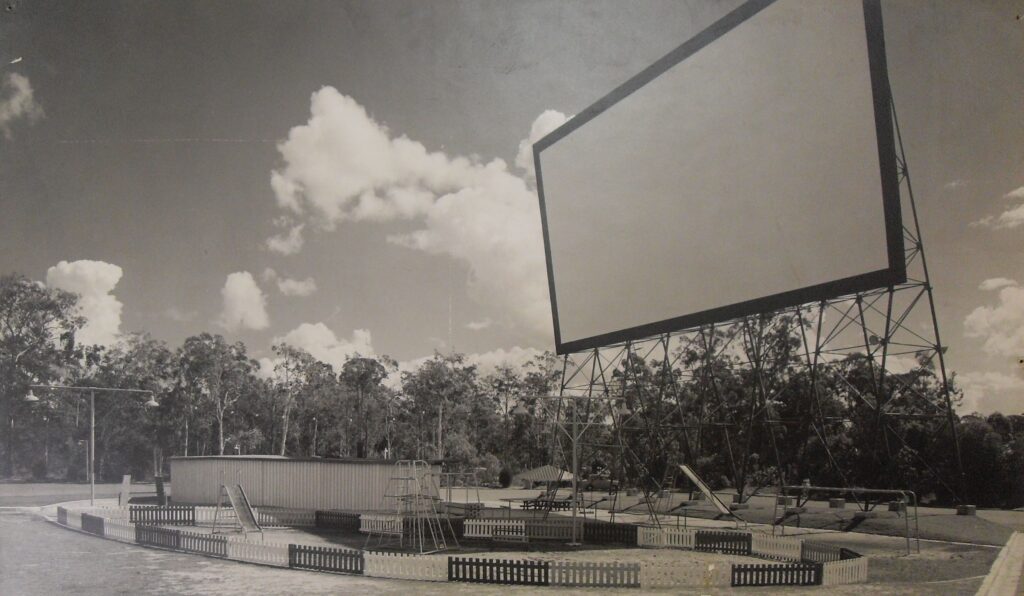
Capalaba Drive-in was revolutionary in bringing cinema beyond the walls of traditional movie houses while embracing the car culture that defined the era.
At dusk, locals would drive to Capalaba, park their cars on the undulating road base so that it pointed up at the huge screen and tune into films through speaker boxes mounted on their car windows.
The Brisbane Telegraph ran an extremely colourful description – two days before the official opening – of what the experience at Capalaba would entail. This is an edited extract (our apologies for the era’s gender stereotyping):
SOURCE: Telegraph (Brisbane, Queensland 1955-1965) Monday 19 December 1955, Page 17
MOVIES AND MEALS AT FIRST DRIVE-IN
From Wednesday onwards you will be able – if you want to – to go to the pictures dressed in your pyjamas and dressing-gown. At the pictures you will be able to smoke and you can have a hot meal sent to you.
These are some of the unusual features of Queensland’s first drive-in theatre, which is being opened at Capalaba on Wednesday night.
Perhaps you have had a worrying day at the office and your wife has had a busy day at home. You can see that she is really too tired to start preparing a meal, and the noise of the children is getting on the nerves of both of you.
You pack the whole family into your car and drive to the junction of Redland Bay Road and Mount Cotton Road at Capalaba. You turn in to Mount Cotton Road and continue for a few hundred yards. You go through a gate and drive across what is a parking area to a ticket office in a double laneway.
You will be parked alongside a stand on which hang two loudspeaker units. You lift a loudspeaker unit into your car, and hang it on the dashboard, rear vision mirror or other handy place. On the speaker unit are a knob and a switch. You turn the knob, and control the volume of sound, which is synchronised with the film being shown on the screen.
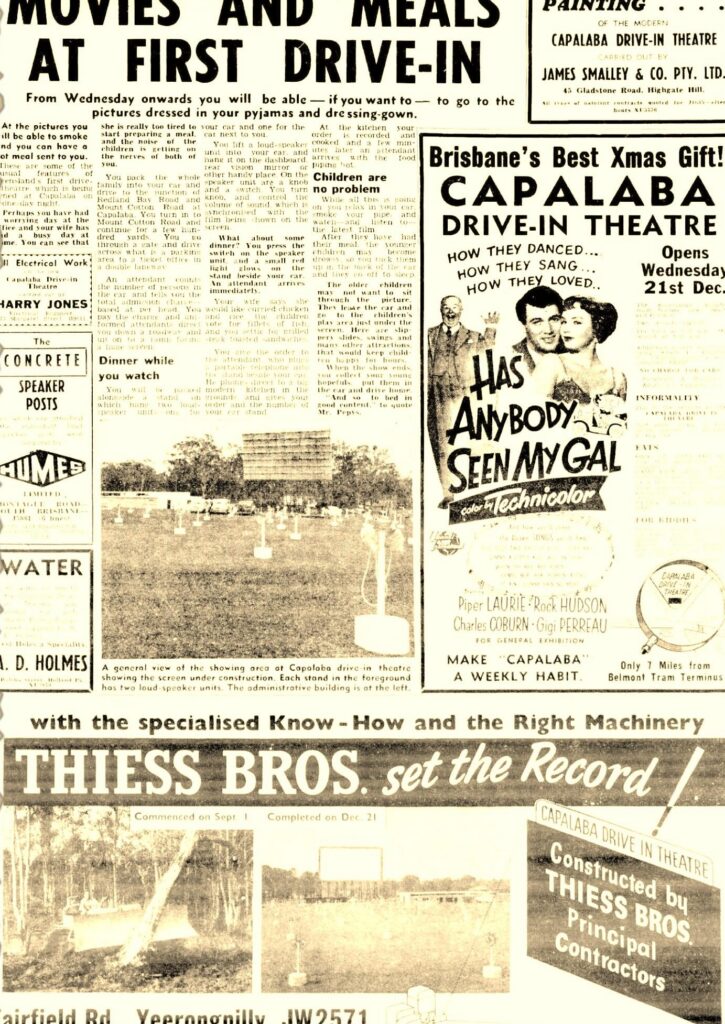
What about some dinner? You press the switch on the speaker unit, and a small red light glows on the stand beside your car. An attendant arrives immediately. Your wife says she would like curried chicken and rice, the children vote for fillets of fish, and you settle for grilled steak toasted sandwiches. At the kitchen your order is recorded and cooked, and a few minutes later an attendant arrives with the food piping hot.
While all this is going on, you relax in your car, smoke your pipe, and watch – and listen to – the latest film. After they have had their meal, the younger children may become drowsy, so you tuck them up in the back of the car and they go off to sleep.
The older children may not want to sit through the picture. They leave the car and go to the children’s play area just under the screen. Here are slippery slides, swings and many other attractions, that would keep children happy for hours.
When the show ends, you collect your young hopefuls, put them in the car and drive home. “And so to bed in good content,” to quote Mr. Pepys.
On the following page was an article detailing the construction project for the drive-in:
SOURCE: Brisbane Telegraph, 19 December 1955, Page 18
BUILDING DRIVE-IN BIG TASK
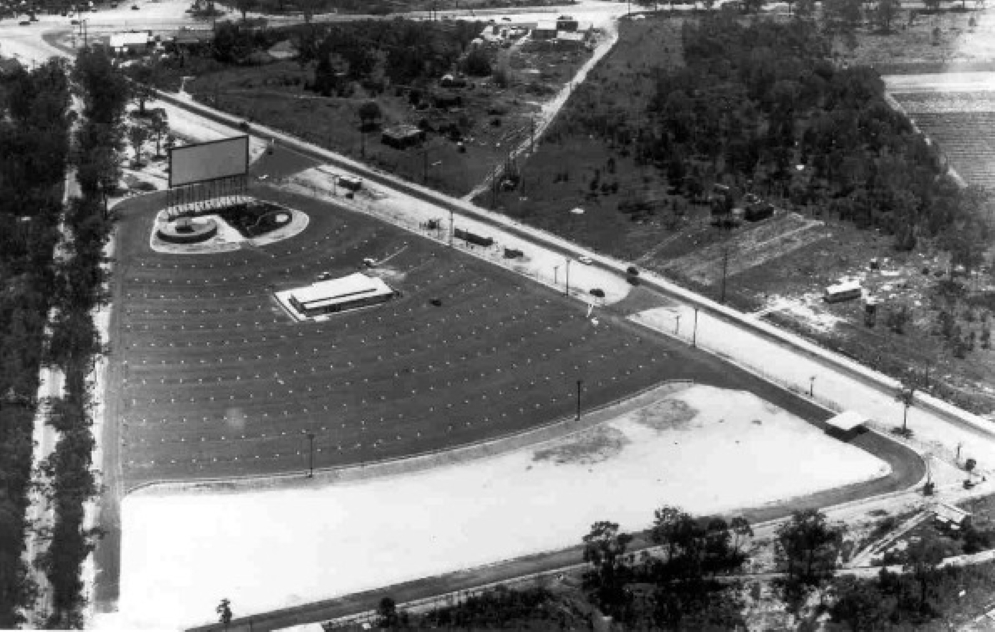
To start a drive-in theatre, you don’t just erect a screen in a paddock and start collecting admission charqes. To convert 14 acres of scrub land into a drive-in theatre at Capalaba has cost about £100,000, necessitated moving 10,000 cubic yards of earth, and involved 36 miles of underground wiring.
Twelve ramps have been constructed, angled so that each of the 500 cars that can be accommodated in the 10-acre showing area has an unobstructed view of the screen. Four acres adjoining the showing area have been cleared and levelled for a car park for up to 500 cars waiting for the second session, and the whole of the 14 acres has been bitumen surfaced.
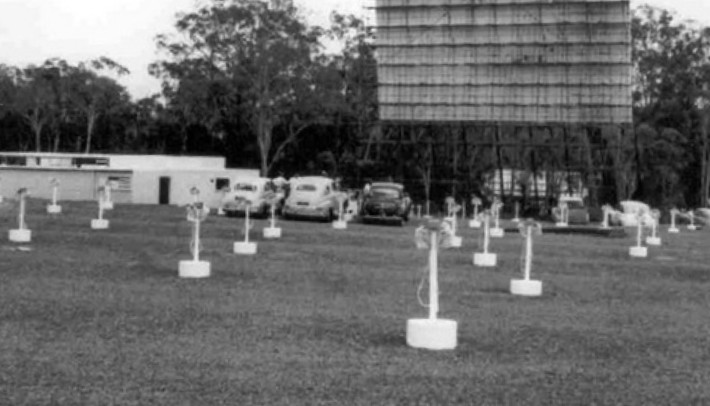
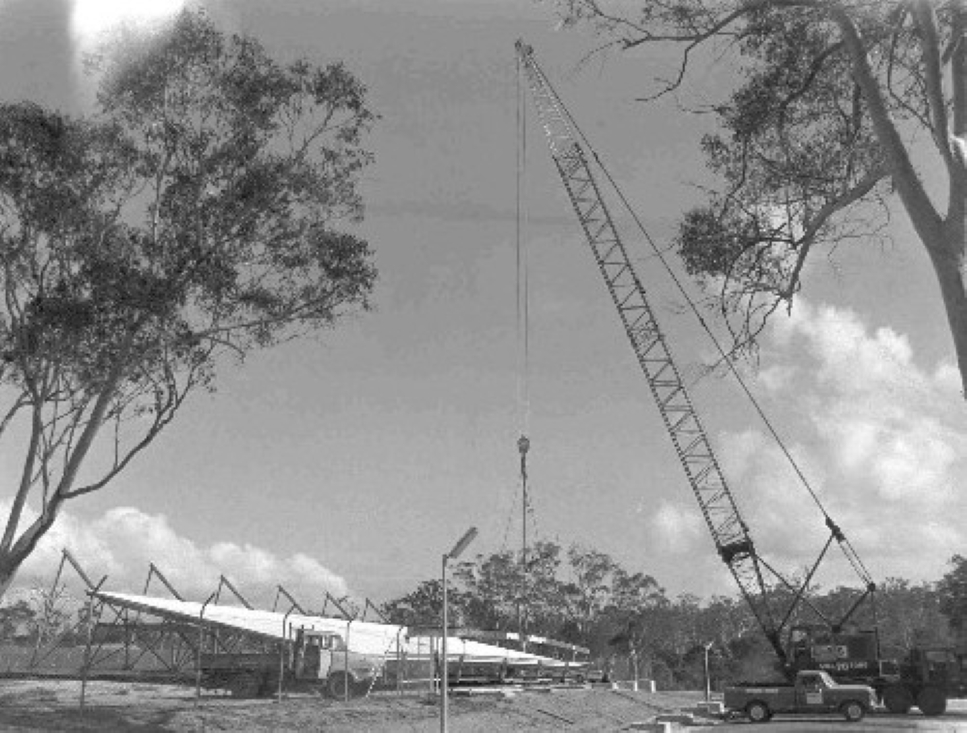
The screen, which measures 80 feet by 40 feet, is of tubular structural steel bedded in 200 tons of concrete. The surface of the screen is of fibro sprayed under pressure with a plastic preparation known as PVC. The bottom of the screen is 30 feet above the ground, and the whole structure has been engineered to withstand winds of up to 100 miles an hour.
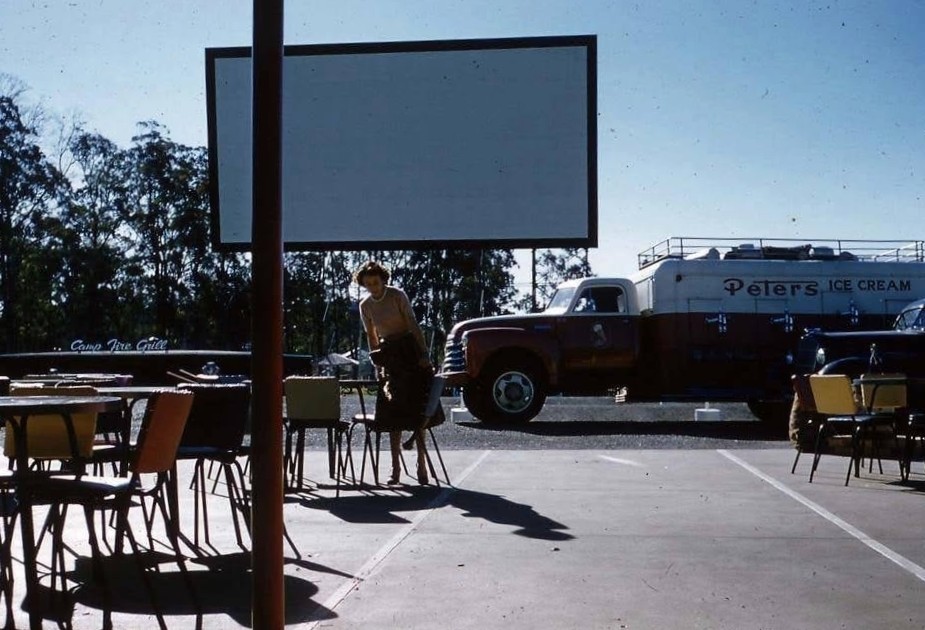
In the area below the screen, a children’s playground has been constructed at the right, and a campfire grill and kiosk at the left. In the centre of the showing area, and at such a level that it does not obstruct the view of any car behind it, is the administrative building, which also houses a large modern kitchen, servery, cold store and soft drinks bar, as well as the projection box.
In the showing area are 250 stands, each holding two loudspeaker units which are checked daily.
The drive-in theatre at Capalaba has taken an army of men about six months to construct, and it will take 32 employees to operate it.
The next day, the paper reported on the drive-in being fumigated from the air:
SOURCE: Brisbane Telegraph, 20 December 1955, Page 5
AIR SPRAY AT NEW THEATRE
Queensland’s first drive-in theatre will be free of summertime insects when it opens tomorrow night at Capalaba. Today aircraft flew over the 14-acre site of the drive-in and sprayed it with insecticide. In 20 sweeps over the theatre, the plane sprayed almost a ton of insecticide to destroy every mosquito, sandfly, cockroach and other pest within miles of its perimeter.
The Capalaba Drive-in held its last screening on its original site in December 1979 before re-opening further along Redland Bay Road near Neumann Road. Capalaba Park Shopping Centre was officially opened on the old site in March 1981 by then State Minister Russ Hinze. Capalaba Central Shopping Centre opened in November 1994 while the re-located Capalaba Drive-in held its last screening on Australia Day in 1997.
At one point, Australia had about 330 drive-in theatres nationwide, 50 of those in Queensland. Now there are only about a dozen nationwide that are still in operation – the closest to Redlands Coast being Five Star Cinema’s Yatala Drive-in.
Like many drive-in theatres throughout Australia, Capalaba Drive-in’s eventual decline reflected changing patterns of entertainment consumption, with the rise of home video, multiplex cinemas, and urban redevelopment transforming the movie-going experience.
Although the drive-in itself no longer stands, its legacy endures in the memories of so many local residents – including those (and you know who you are) who used to hide in the boot of a car or under a blanket in the back seat to avoid paying admission.