
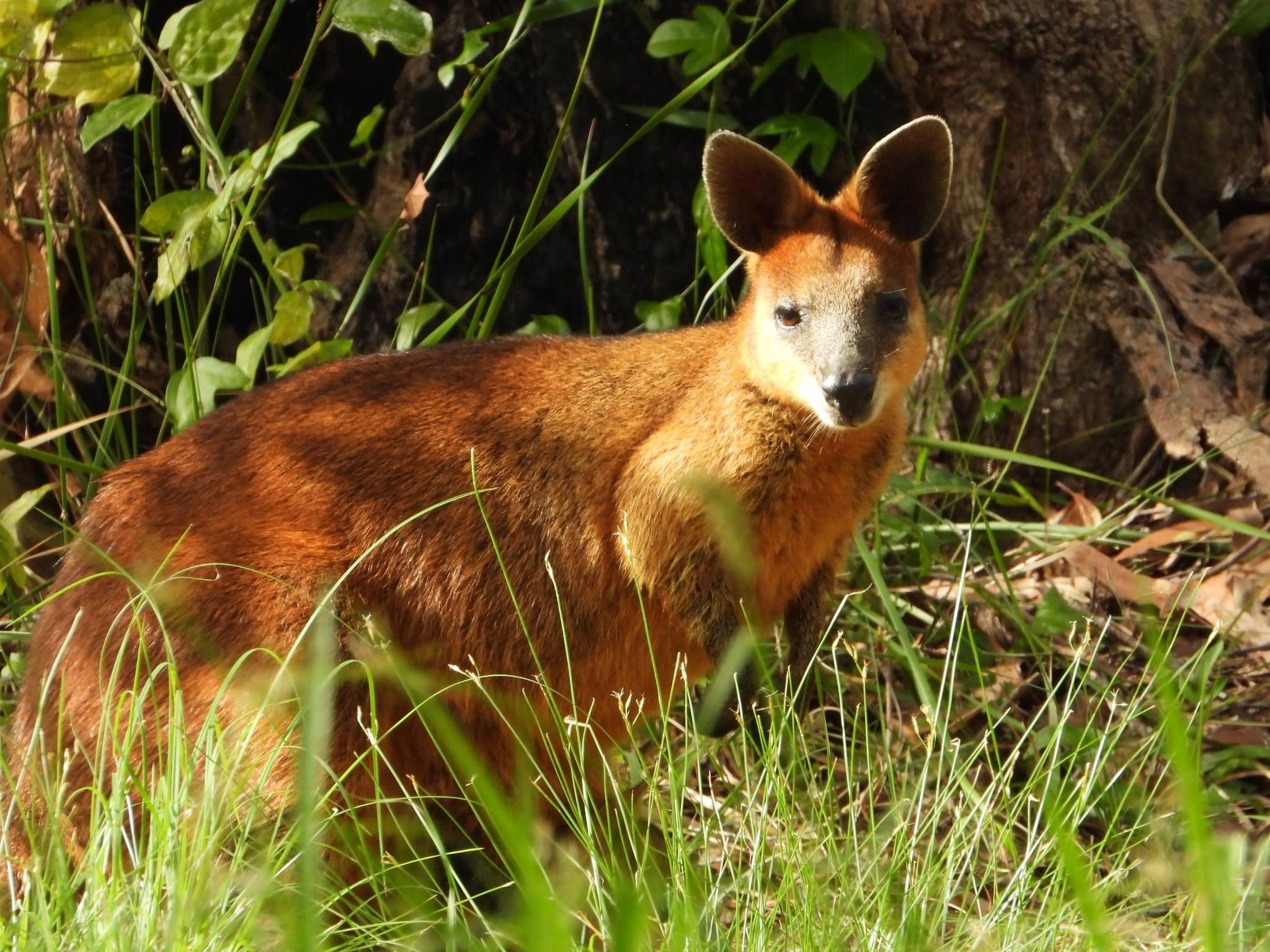
In the coastal woodlands of North Stradbroke and Russell islands lives an animal so unusual that many people outside of those areas are unaware it exists.
The golden swamp wallaby, with its shimmering honey-coloured coat, appears almost mythical against the greens and browns of the bush.
While swamp wallabies are found along much of Australia’s eastern seaboard – from Cape York to South Australia – this rare golden morph occurs only on North and South Stradbroke islands, Russell Island and parts of the adjacent mainland, including the Gold Coast hinterland and Nerang State Forest.
Video courtesy of Russell Island resident Darren Lewis
Its restricted distribution and striking appearance have made it one of the region’s most intriguing wildlife mysteries.
Although they look dramatically different from their dark-coloured counterparts, golden swamp wallabies are not a separate species. They are the same species as the common swamp wallaby (Wallabia bicolor), one of Australia’s most widespread marsupials.
A common swamp wallaby spotted in the IndigiScapes grounds at Capalaba
Scientists believe the golden colouring is likely the result of a genetic mutation that reduces pigment in the fur, creating the distinctive golden appearance that sets these animals apart – much like rare golden brushtail possums (Trichosurus vulpecula).
What remains unclear is why the trait has persisted in only a handful of locations.
One theory is that the lighter colouring may provide an advantage in the sandy coastal forests and heathlands of south-east Queensland. Swamp wallabies vary considerably in appearance across their range. Animals living in the cooler, wetter forests of southern Australia tend to be larger, darker and shaggier, while those in northern regions often display lighter colouring better suited to local conditions.
Whatever the evolutionary explanation, the result is remarkable. When sunlight filters through the trees and catches its coat, a golden swamp wallaby can appear to glow against the forest backdrop, lending it a fairytale-like quality rarely seen in Australian wildlife.
Yet the species is remarkable for more than its appearance.
Macropods, such as the swamp wallaby, possess one of the most unusual reproductive systems in the animal kingdom. Researchers have discovered that female macropods can conceive a new embryo before giving birth to their current offspring.
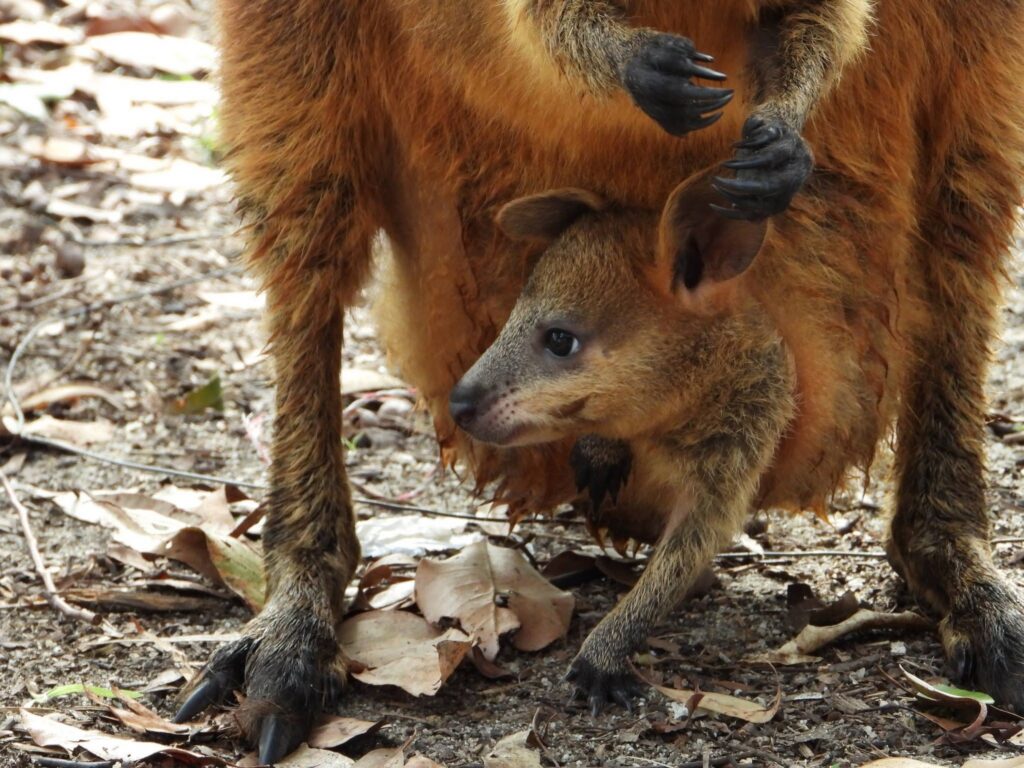
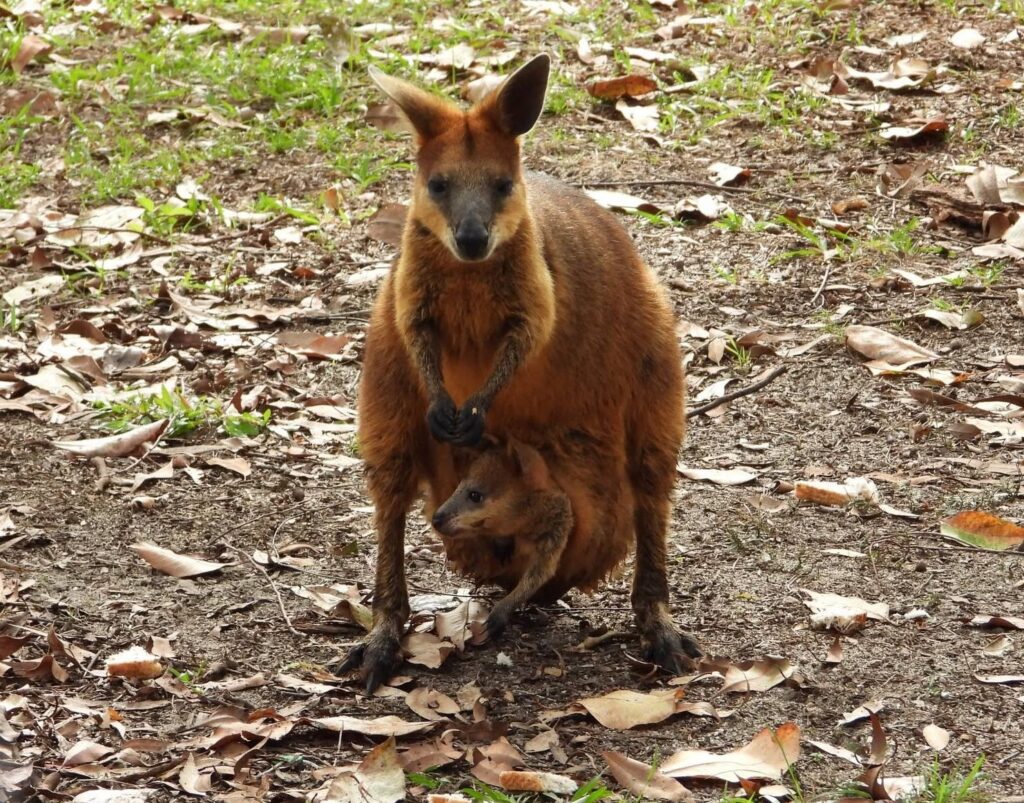
Just one to two days before delivering a full-term joey, a female can ovulate, mate and form another embryo. Through a process known as embryonic diapause, the development of that embryo can then pause until conditions are suitable for growth.
The result is an extraordinary reproductive cycle. A female macropod may simultaneously support a newborn joey in the pouch, a dormant embryo awaiting development and an older offspring that has recently left the pouch. Effectively, females remain pregnant for much of their reproductive lives.
It is a breeding strategy unique among mammals and one that has helped swamp wallabies thrive in Australia’s often unpredictable environment.
Despite their biological significance and striking appearance, golden swamp wallabies remain largely hidden from public view. Living in dense vegetation and often avoiding human activity, they can spend their lives unseen, even in areas frequented by bushwalkers and nature lovers.
North Stradbroke Island (Minjerribah) and Russell Island residents are rightly protective of their golden swamp wallaby populations and sometimes post photos of them on Facebook to encourage locals and visitors to be aware of them when driving and to ensure dogs are contained to avoid interactions.
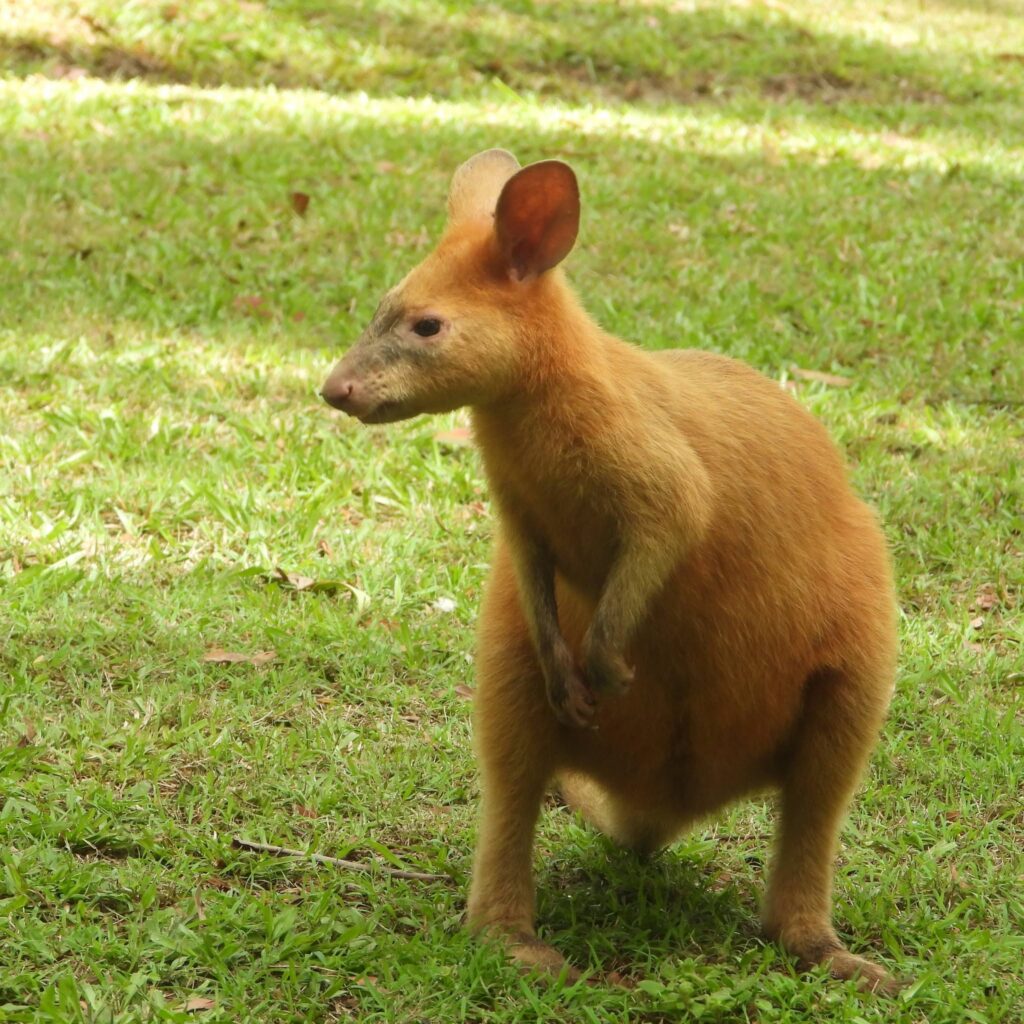
Part scientific curiosity, part natural wonder, the golden swamp wallaby is a rare example of nature’s ability to transform the familiar into something extraordinary.
Hidden within a small corner of the south-east, it remains one of Redlands Coast’s most captivating wildlife secrets.
To report sick and injured wildlife, phone the Redlands 24-hour Wildlife Rescue service on (07) 3833 4031.