


Does your dog, or your neighbour’s dog suffer from IBS – Irritable Bow-wow Syndrome? Does its constant barking keep you and the street awake at night?
There is no doubt that dogs enrich our lives – offering companionship and happiness to so many people – but problem barking can have an opposite and immediate effect. With more than 30,000 registered dogs in the city, it is not surprising that problem dog barking tends to be one of the most common complaints across the suburbs of Redlands Coast.
Introducing a puppy to the family is considered by many to be a great way for children to learn how to care for others through the responsibilities that pet ownership brings.
Responsible pet ownership includes being mindful of how often your dog barks. Some barking is acceptable, but excessive barking can become a neighbourhood nuisance.
By and far, most pet owners manage their animals very well. But if your dog is barking excessively, it’s important to find out why.
Problem barking differs from one dog to the next. It could be because they are excited, stressed, bored, in pain, defending their territory, or perhaps lonely – and many dogs will bark when their owners are not at home.
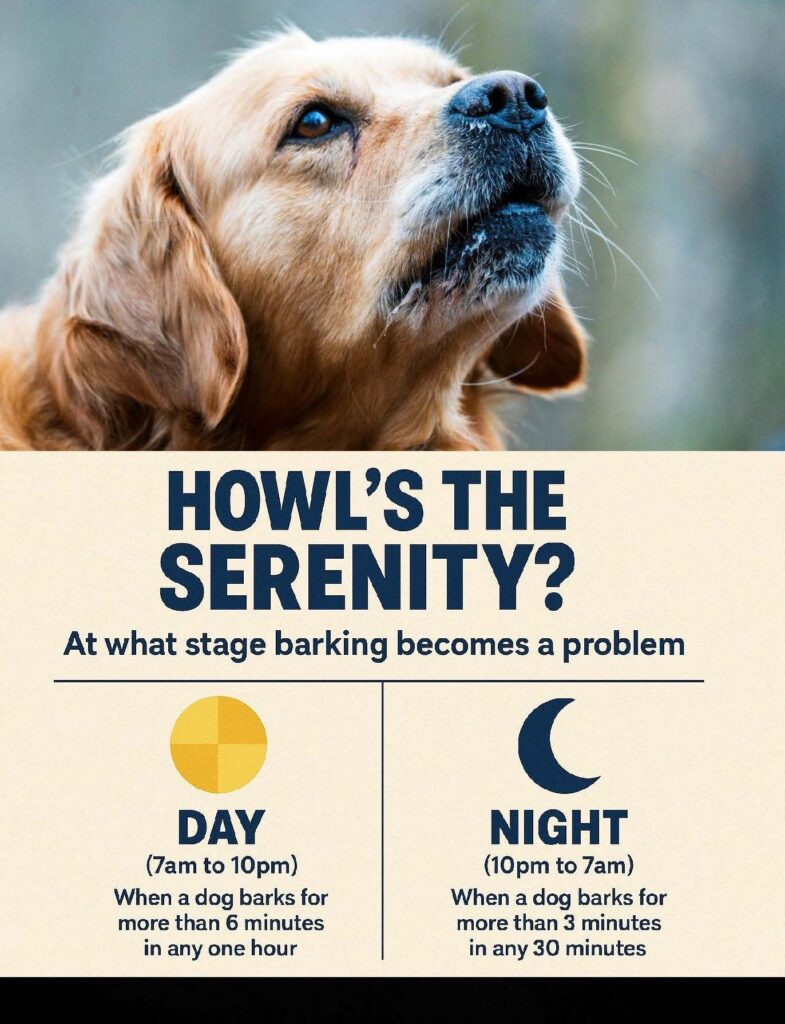
Under Redland City Council’s local law, owners are responsible for ensuring their animal doesn’t cause a noise nuisance. A dog is considered to be creating a noise nuisance if:
- It barks/howls for more than a total of 6 minutes in any one-hour period between 7am and 10pm on any day
- It barks/howls for more than a total of 3 minutes in any 30-minute period between 10pm and 7am on any day
Council encourages concerned neighbours to speak with the dog’s owner in the first instance.
Talk to your neighbour as soon as the problem arises as they may not be aware that their dog is barking or that their dog’s barking is bothering you.
Often the dog’s owner will be keen to understand if their pets are a problem when they are not home and what may be causing it.
Council also has these tips that may help you with reducing your dog’s barking problems:
Reduce excess visual stimulation
- Keep the dog in the back yard or erect screens to minimise visual stimulus and correct the dog each time it barks.
Reduce boredom when left alone
- Provide mental stimuli for the dog in the form of balls, rubber chew toys with treats inside, or a large beef knuckle bone
- Leave a radio playing which is audible to the dog (but not the neighbours)
- Ensure the dog has plenty of quality time with family members and receives adequate daily exercise.
Provide adequate food, water and shelter when left alone
- Ensure the dog has fresh water and a comfortable area to shelter from the weather
- Feed the dog prior to it being left on its own or scatter food throughout the yard for the dog to find.

There are also a number of handy tips on Council’s website to help dog owners and the public manage the issue, go to redland.qld.gov.au where you will find:
- Information of where to seek professional help with your dog’s barking
- Links to other agencies, such as the RSPCA, who can offer further advice
- Advice on when neighbours should contact Council or the Queensland Government’s Dispute Resolution Centre, or lodge a noise complaint
- A ‘Dear Neighbour’ blank letter that you can download, fill out and deliver to them if you are uncomfortable speaking with your neighbour directly.
Council’s Animal Management Team offers advice and assistance to residents and can be contacted on (07) 3829 8999.