
North Stradbroke Island is no stranger to ship wrecks.
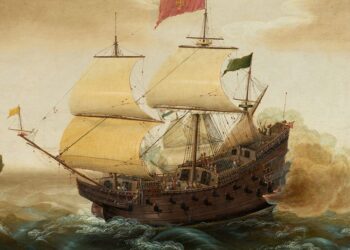
One of the most dramatic also involved an historic wooden sailing ship – but in this case it wasn’t a slow three-masted Spanish galleon but a fast two-masted Australian-made brigantine.
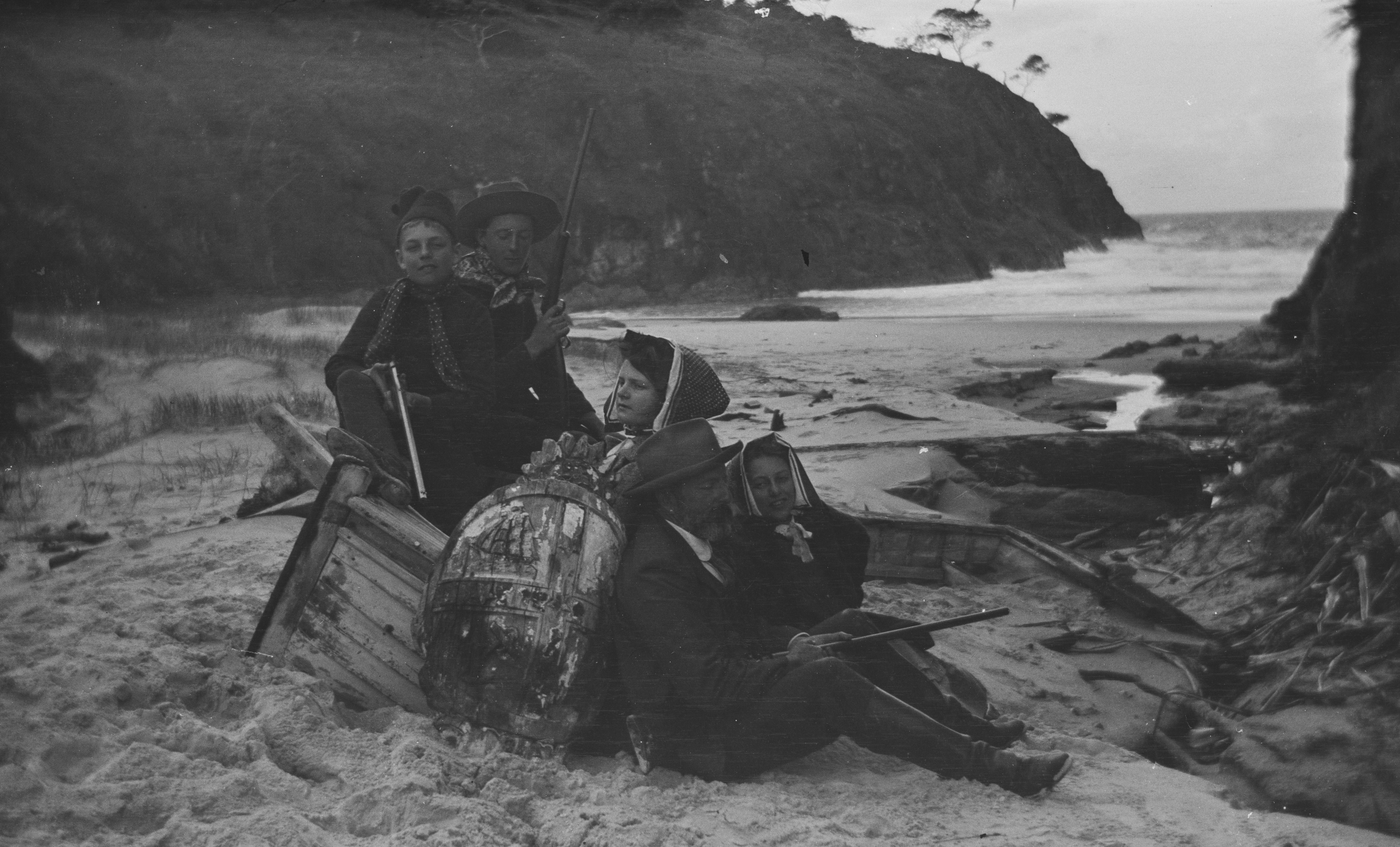
In 1902, just past midnight on a mid-February night during a raging gale, the sailing ship Prosperity struck rocks off Point Lookout while carrying sugar machinery from Sydney to North Queensland. The swell drew it cruelly into the headlands and shattered the hull. Portions of the brigantine came to rest in South Gorge and rusted pieces of the cargo are still wedged into the rocks to this day.
Owned by Mr B M Corrigan of Sydney, the Prosperity was a wooden vessel weighing 125 ton with a length of 92ft.3in or approximately 28.1m. It was built in Brisbane Water (NSW Central Coast) in 1868.
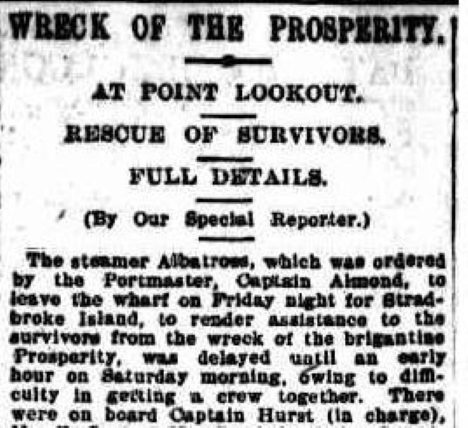
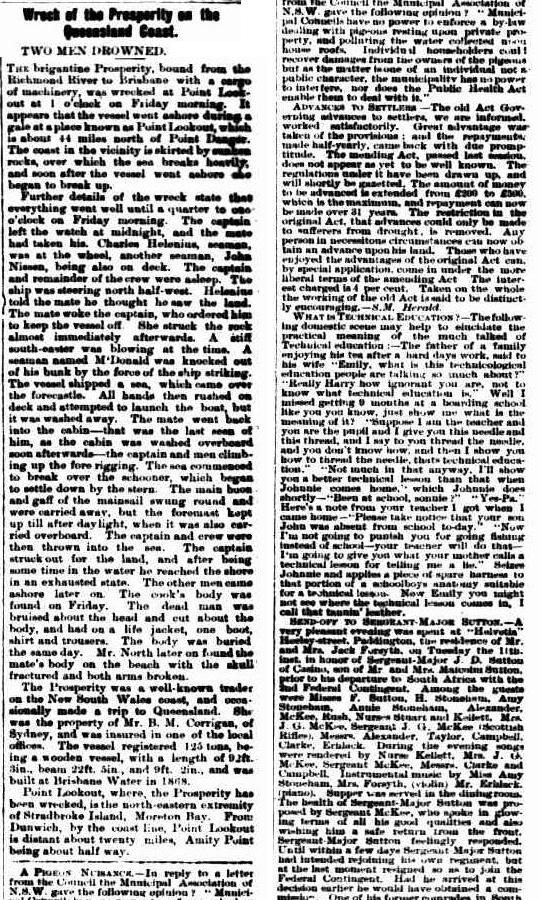
A few days after the wreck, The Northern Star newspaper reported on the Prosperity’s fate, giving a blow-by-blow description of its final moments at sea:
“… everything went well until a quarter to one o’clock on Friday morning. The captain left the watch at midnight, and the mate had taken his. Charles Helenius, seaman, was at the wheel, another seaman, John Nissen, being also on deck. The captain and remainder of the crew were asleep. The ship was steering north half-west.
“Helenius told the mate he thought he saw the land. The mate woke the captain, who ordered him to keep the vessel off. She struck the rock almost immediately afterwards. A stiff south-easter was blowing at the time. A seaman named McDonald was knocked out of his bunk by the force of the ship striking.
“The vessel shipped a sea, which came over the forecastle. All hands then rushed on deck and attempted to launch the boat, but it was washed away. The mate went back into the cabin – that was the last seen of him, as the cabin was washed overboard soon afterwards – the captain and men climbing up the fore rigging.
“The sea commenced to break over the schooner, which began, to settle down by the stern. The main boom and gaff of the mainsail swung round and were carried away, but the foremast kept up till after daylight, when it was also carried overboard. The captain and crew were then thrown into the sea.
“The captain struck out for the land, and after being some time in the water he reached the shore in an exhausted state. The other men came ashore later on. The cook’s body was found on Friday. The dead man was bruised about the head and cut about the body, and had on a life jacket, one boot, shirt and trousers. The body was buried the same day. Mr. North later on found the mate’s body on the beach with the skull fractured and both arms broken.”
The Northern Star’s reporting that both bodies were located appears to dispel a common belief that a skeleton and boot uncovered more than 50 years later in the sand at Point Lookout belonged to either the cook or the mate. Following the 1956 discovery, the beach was duly given the somewhat pirate-worthy name – Deadman’s Beach.